orto space
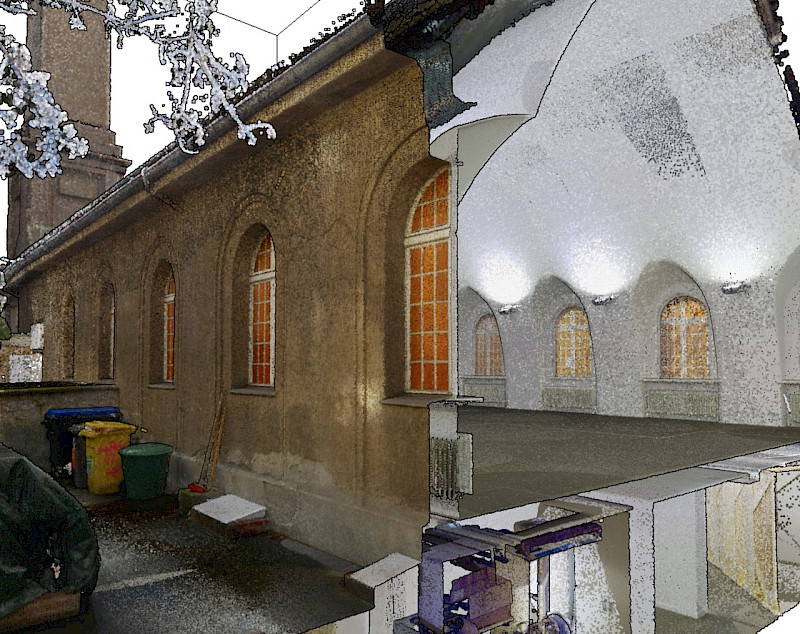
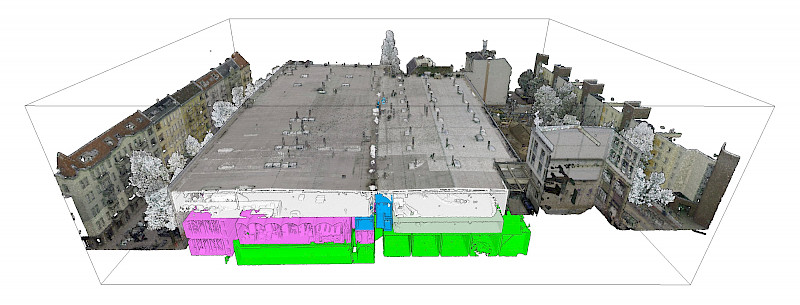
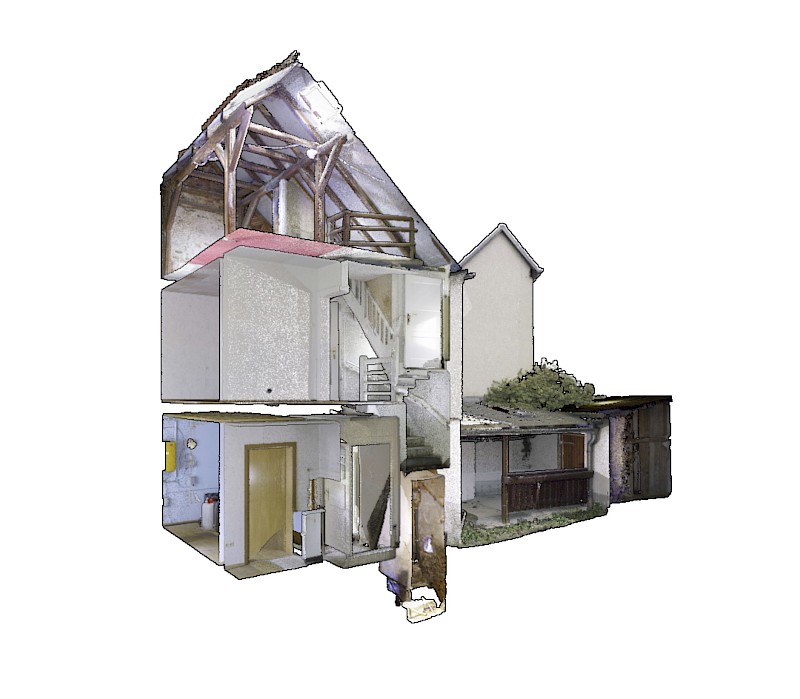
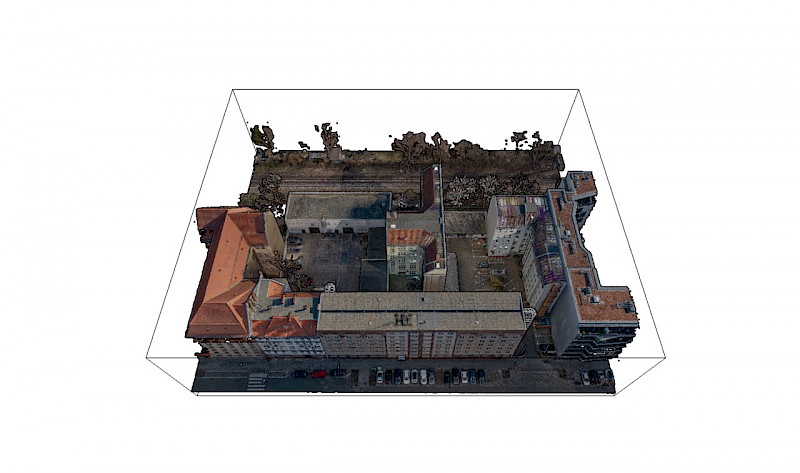
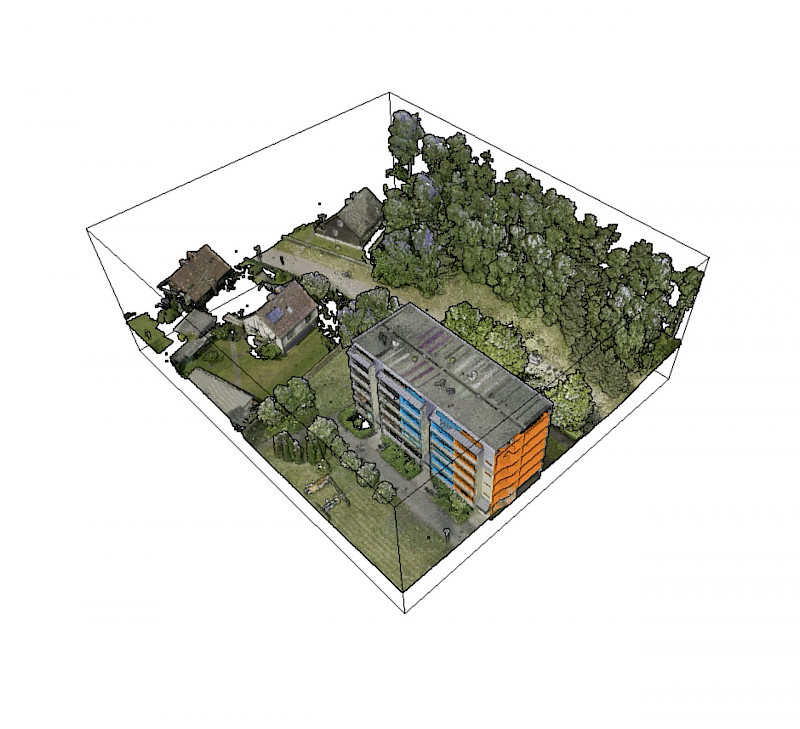
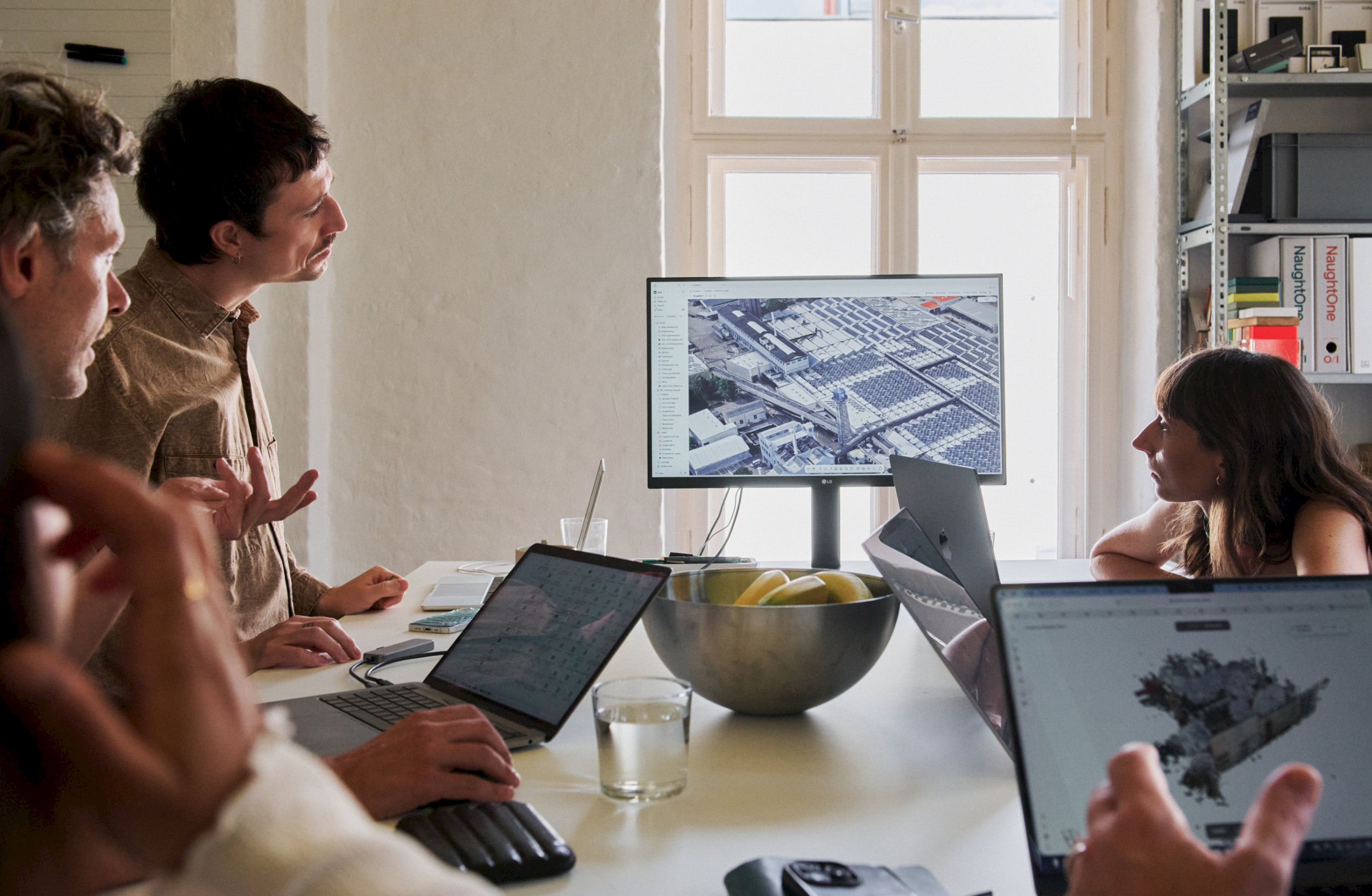
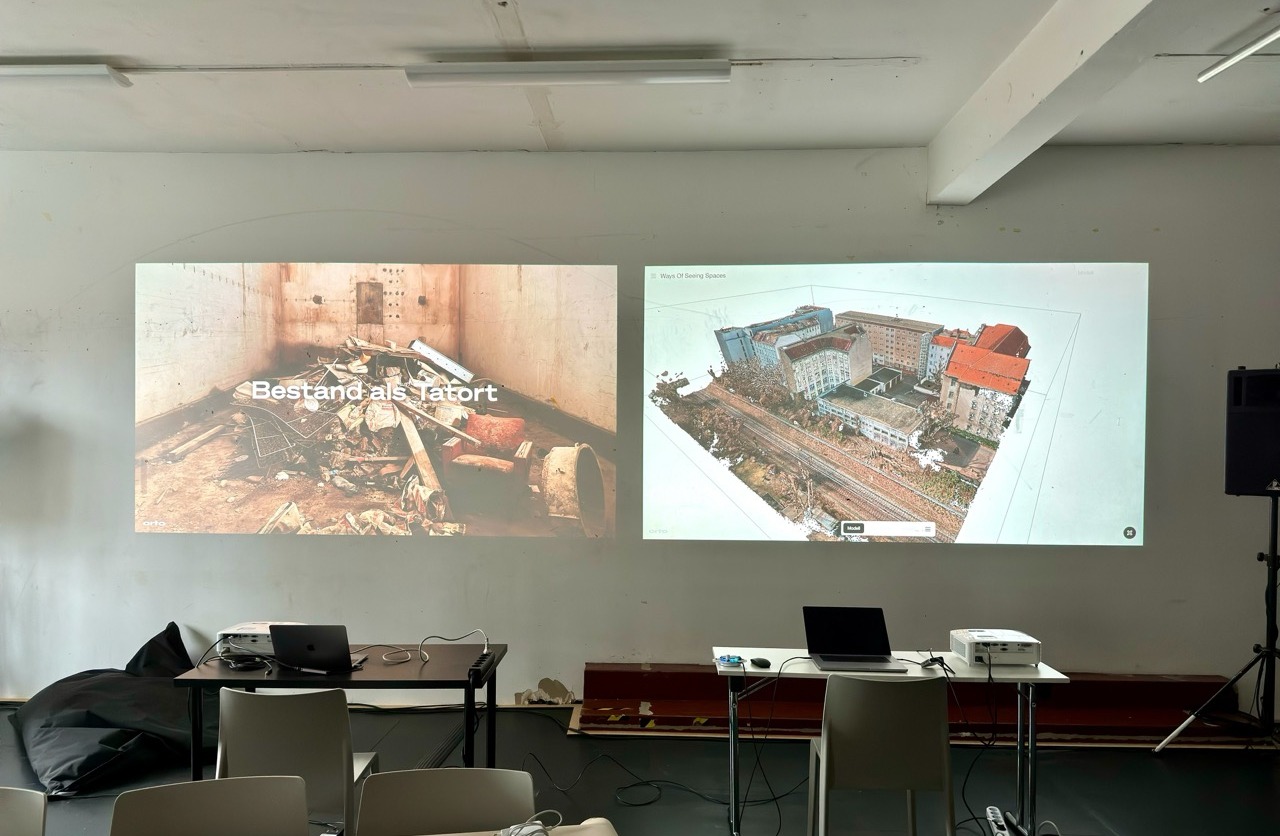
Collaborate in the point cloud model, straight from the browser
- Precisely determine dimensions, components and condition
- Pin reports to their location and find them easily
- Bring all disciplines together in one model

Rethink what’s already built.
Technology for circular construction.

For projects involving existing buildings, we deliver everything from a single source: from precise 3D data capture and in-depth potential analysis to a shared workflow in our software.
Circular, cost-effective planning, for engineers and non-engineers alike.
Collaborate in the point cloud model, straight from the browser
High-precision laser surveys for planning, reuse and life cycle assessment
Data-driven analyses for the high-value reuse of existing buildings
Component audits and digital archiving
Reuse potential and risk assessment
Life cycle assessment (LCA) to DIN EN ISO 14040
»We see existing buildings as an opportunity, so we built the tool that helps us most in our own work.«
Felix Matschinske, Co-Founder → Our Mission
Accurate data early on gives planning a head start.
Reduce planning risk and costs with precise data from the start.
Costs
Cut travel and coordination time with central access to all data.¹
Time
Increase property value through transparent documentation.2
Market Value
1: AACE International (2020). Cost Estimate Classification System – As Applied in Engineering, Procurement, and Construction.
2: ETASR (2023). Construction Cost Overrun Analysis Studies.
Strategic Developments
Benefits for projects





The name orto stands for undistorted space. The Greek όρθος, orthos, means “straight, upright, correct”, and the Old High German Ort means “point, place”.
We work and carry out research at the intersection of architecture, software development, building digitisation and sustainability management, with the aim of making the potential of existing buildings visible and accessible.
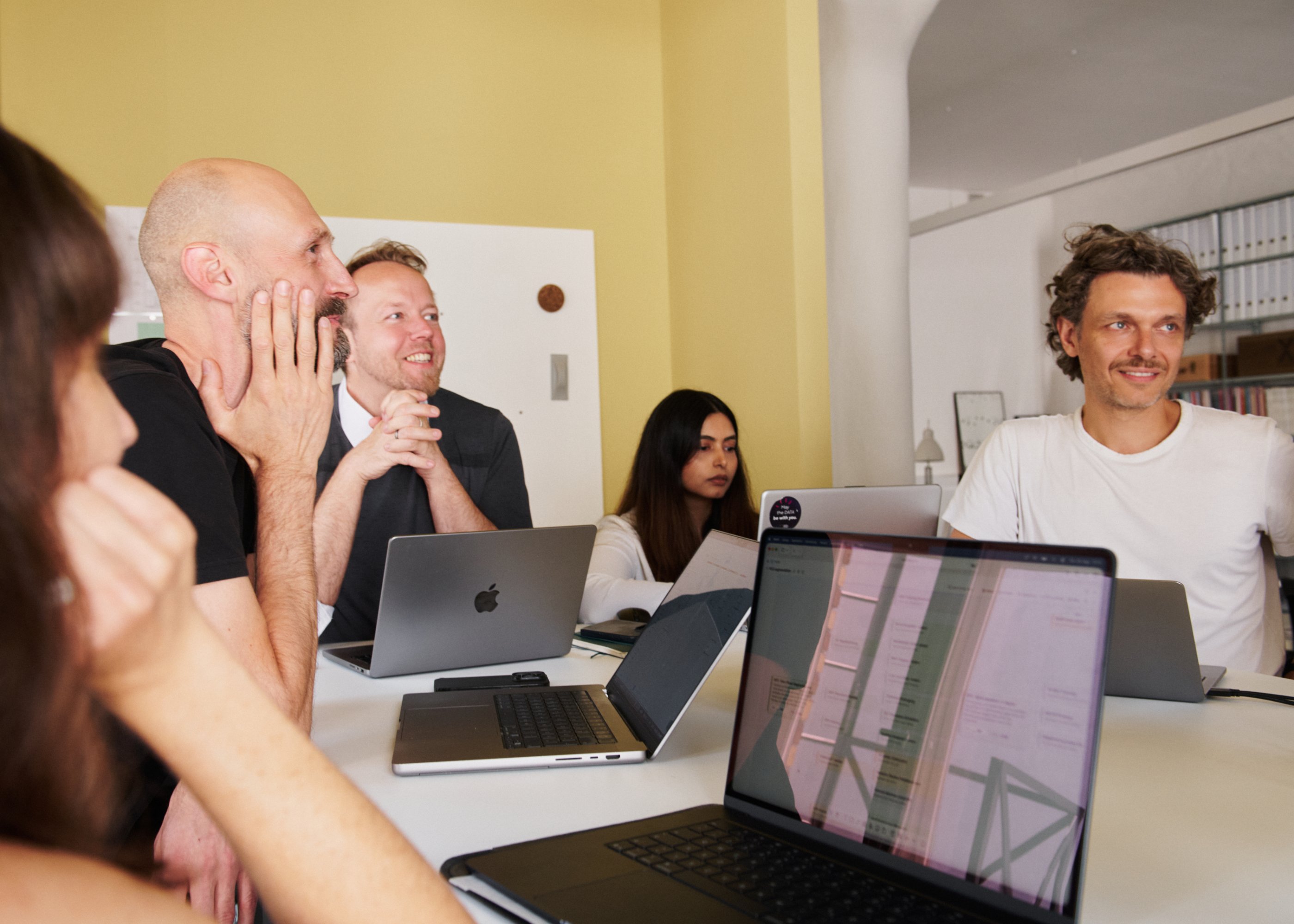
Our team is based in Berlin and currently has six permanent members. We work closely with project teams in an advisory role, bringing data capture and assessment into the way architecture practices, larger organisations and municipalities work.
For on-site capture and assessment we draw on specialists from our expert network as each focus requires, on projects ranging from single-family homes to industrial sites, across Germany and the rest of Europe.

Felix Matschinske
Co-Founder, Managing Director
Felix is a qualified architect (Dipl.-Ing.) and co-founder of orto. His engineering firm MUH specialises in measured surveys and plan data production. With Lucid Berlin GmbH, which he co-founded with a partner, he spent many years developing digital platforms that made complex content clear and accessible for clients such as GIZ, the Heinrich Böll Foundation and WWF. At orto, he now brings both fields together to help drive the shift to sustainable construction.

Alexander Werle
Co-Founder, Managing Director
Alexander is a designer, economist and co-founder of orto. Over more than 20 years as a digital strategist, most recently in divisional leadership at diffferent, he has supported start-ups and corporations in product development. He was always drawn to the same point: where economic risk and creative ambition diverge. In existing buildings, that gap is especially wide, even though the information is right there in the building. At orto, he works on making it available early enough for deconstruction and environmental assessment.

Nidhi Sonavane
AI Engineer
Nidhi is a civil engineer and AI engineer, a combination rarely found in construction. She holds a master’s degree in Computational Engineering from the Technical University of Munich, specialising in machine learning, generative AI and computer vision. Her civil engineering background gives her first-hand knowledge of design software and of the requirements placed on as-built data. At orto, she develops the models for semantic segmentation and component recognition in point clouds and is responsible for the AI architecture behind them.

Stefan Wunderwald
Design Lead
Stefan is a qualified communication designer and has worked in creative direction and UX/UI design for more than 20 years. He has been part of orto from day one and is responsible for the company’s visual identity as well as the visual language of the product, from typography to the design system. Making dense data and its information hierarchies legible is the real task here. His work gives orto a presence that stays calm and precise, and users an interface they are glad to spend time in.

Sandra Schumann
Product Development
Sandra holds a Bachelor of Arts in Design and has completed a vocational apprenticeship in a skilled trade. For more than ten years, she has guided physical products through their entire life cycle, from the initial idea and the sampling stage to handover to production. Her trade background gives her the perspective of the people who end up working with the tool. Her enthusiasm for the dynamics of digital products led her to train further as a UX designer. At orto, she brings both together, translating user needs and usability requirements into workflows that hold up in everyday work with building data.

Matthias Urban-Mattke
Software Engineer
Matthias holds a degree in business informatics (Dipl.-Wirtschaftsinformatiker) and has worked as a technical director and software developer for more than 18 years, specialising in database design, cloud architecture and data integration. He has designed and built reporting and dashboard systems that make large volumes of data accessible to domain experts. As lead developer at orto, he is responsible for turning extensive 3D datasets into high-performance web applications.
Principles
Existing buildings hold more value than meets the eye. We make that value measurable. With precise data, owners and planners decide what stays, what gets converted and what gets deconstructed. Our products make this decision-making transparent, so people without an engineering background can have a say too.
Digital building data is the foundation of sustainable construction decisions. It belongs to those who capture and use it. orto space gives everyone involved a protected space to work together. Data protection and ownership rights are not negotiable.
Following short-term trends often leads to isolated solutions. We rely on open standards instead of proprietary formats. That keeps building data usable over the long term, whatever software or provider is behind it. It makes planning more reliable and more sustainable.
Experts alone won't build a circular economy. It needs tools that many people can use. We combine technical precision with ease of use. Our solutions fit into existing planning processes and work with tools already in use. That way, new ways of working take shape in practice.
Digitising buildings since
2017
Founded
2022, Berlin
Total floor area digitised
approx. 190.000m2
Client Industries
Architecture and Planning, Deconstruction, Real Estate Development, Property Management, Research
Awards
German Federal Ecodesign Award (Digital Service 2025)
German Digital Award (Gold, Digital Product 2025)
DIN-Connect winner (2024)